Key takeaways
- Custom software cost is driven mainly by scope, platforms, integrations, design depth, compliance needs and the team model you choose.
- Broad market estimates run from about $25,000 for an internal tool to $1,000,000 or more for a complex platform.
- Fixed price suits stable scope, time and materials suits evolving requirements, and a dedicated team suits long-term products.
- Budget for hosting, third-party services, maintenance, support and improvements after launch, not only the initial build.
- Starting with an MVP, phasing the roadmap and comparing quotes against the same scope keeps spending predictable without cutting quality.
Ask how much custom software costs and the honest answer is "it depends." That answer is only useful if you know what it depends on. A simple internal tool for a team of ten and a customer platform serving thousands of users are both "custom software," and their budgets can differ by a factor of twenty or more.
This guide explains the main cost drivers, gives broad market ranges for common project types, compares pricing models, and covers the ongoing costs that many first budgets leave out. It closes with practical ways to reduce cost and to compare vendor quotes fairly.
Typical custom software cost ranges in 2026
For US businesses working with an experienced development partner, projects tend to fall into three broad tiers. These are estimates based on typical market rates. Real costs vary widely by scope, team location, vendor and timeline. They are not quotes.
| Project type | Typical examples | Estimated build cost (USD) | Typical timeline |
|---|---|---|---|
| Internal tool | Approval workflow, inventory tracker, admin dashboard, reporting portal | $25,000 to $100,000 | 1 to 4 months |
| Customer-facing web or mobile app | Customer portal, booking app, marketplace MVP, field service app | $75,000 to $300,000 | 3 to 9 months |
| Complex platform | Multi-role SaaS product, platform with many integrations, regulated workloads | $250,000 to $1,000,000 or more | 6 to 18 months or longer |
Very small projects, such as a single-purpose automation or a clickable prototype, can come in below these ranges. Large enterprise systems can sit well above them. The rest of this article explains what moves a project up or down within a tier.
What drives the cost of custom software
Software cost is mostly people's time. Every factor below adds design, development, testing or coordination hours.
Scope and complexity
The number of screens, user roles and business rules is the biggest driver. A form that saves data to a database is simple. A form that calculates pricing from twelve rules, routes for approval based on amount and region, and sends notifications is not. Ask how many distinct things users must be able to do, and how many exceptions each one has.
Platforms
A responsive web app that works on phones and desktops is usually the most economical starting point. Native iOS and Android apps add cost because each platform has its own build, testing and app store review. Cross-platform frameworks can reduce that overhead, but a web, iOS and Android launch will still cost more than web alone.
Integrations
Connecting to your ERP, CRM, payment provider, shipping carrier or identity system often takes more effort than buyers expect. Cost depends on whether the other system has a well-documented API, how clean its data is, and whether data must flow one way or both ways. Older systems without modern APIs can be the single most expensive part of a project.
Design and user experience
A simple internal tool can use a standard component library with light customization. A customer-facing product usually needs user research, wireframes, a visual design system and usability testing. That work tends to pay off in adoption, but it is a real line item.
Security and compliance
If you handle health records, payment card data, financial information or personal data covered by state privacy laws, expect added work: access controls, audit logs, encryption, security testing and documentation. Frameworks such as HIPAA, PCI DSS or SOC 2 shape architecture and hosting choices. Confirm your specific obligations with your legal or compliance advisor.
Team model and location
Rates vary by region and seniority. US-based teams generally cost more per hour than nearshore or offshore teams, while blended models (US-based leadership with a delivery team abroad) sit in between. Lower hourly rates only save money if the team is experienced, communicates well and needs little rework.
Pricing models: fixed price, time and materials, dedicated team
How you pay affects risk, flexibility and total cost as much as the hourly rate does.
| Model | How it works | Best for | Watch out for |
|---|---|---|---|
| Fixed price | Agreed scope for an agreed price | Small, well-defined projects | Change requests, padded estimates, rigid scope |
| Time and materials | Pay for actual hours worked | Evolving products, unclear requirements | Budget drift without strong tracking |
| Dedicated team | Monthly fee for a stable team | Long-term products with ongoing roadmaps | Paying for capacity you do not use |
Fixed price
A fixed-price contract gives you budget certainty. The trade-off is that vendors price in their risk, so the quote often includes a buffer. Any change after signing becomes a change request with its own cost. This model works best when requirements are stable and well documented.
Time and materials
With time and materials, you pay for the hours the team actually spends. It suits projects where you expect to learn and adjust as you go. To keep it under control, ask for weekly reports of hours by feature, a running estimate to complete, and a budget checkpoint that triggers a review.
Dedicated team
A dedicated development team works on your product full time for a monthly fee. It makes sense once you have a product with a long roadmap and want continuity, shared knowledge and steady progress. It is usually a poor fit for a one-off project with a clear end date.
Many companies combine models: a fixed-price discovery phase, then time and materials or a dedicated team for the build.
Ongoing costs after launch
The launch invoice is not the total cost of ownership. Plan for these recurring items from the start.
- Hosting and infrastructure: cloud servers, databases, storage, backups and content delivery. A small internal tool may cost tens of dollars a month to host, while a high-traffic platform can cost thousands.
- Third-party services: email delivery, maps, payments, authentication, monitoring and AI model usage are often billed per user or per transaction. Check each vendor's current pricing page.
- Maintenance: security patches, framework and library updates, operating system changes and bug fixes. Mobile apps also need updates when Apple and Google change their requirements.
- Support: someone to answer user questions, investigate issues and respond to outages, ideally under a defined service level.
- Improvements: new features and changes that users will request once they rely on the software.
As a planning rule of thumb, many organizations budget somewhere around 15 to 25 percent of the original build cost per year for maintenance and modest improvements. Treat that as a starting point for discussion, not a fixed figure. Skipping maintenance tends to build up technical debt, which makes every future change slower and more expensive.
How to reduce cost without cutting quality
The cheapest way to build software is to build less of it, and to build the right parts first.
Start with a minimum viable product
A minimum viable product delivers the smallest set of features that solves the core problem for real users. It gets something useful into people's hands sooner, and it shows you what to build next based on actual usage rather than guesses.
Phase the roadmap
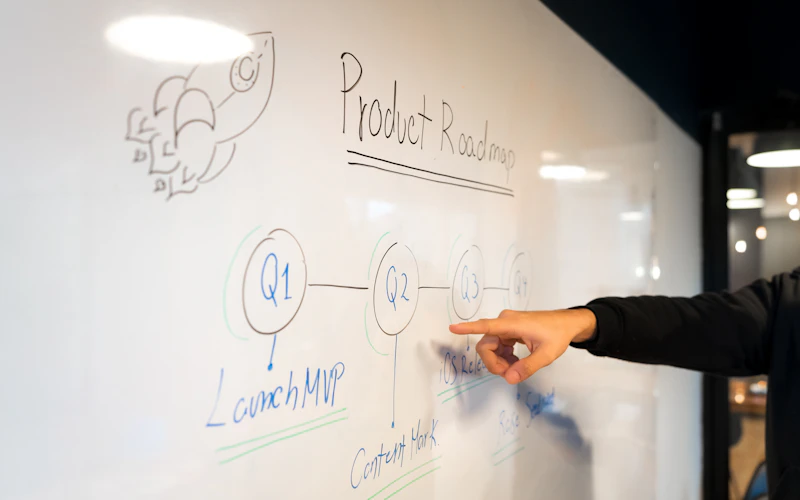
Split the work into releases. Phase one might cover the main workflow for one user group. Phase two adds reporting and a second role. Phase three adds integrations that are helpful but not essential. Each phase gets its own estimate, so you can stop, pause or change direction with less waste.
Other practical savings
- Invest in discovery. A few weeks of requirements, wireframes and technical planning prevents expensive rework later.
- Use proven building blocks. Established services for authentication, payments and admin screens are cheaper than building your own.
- Buy what is standard, build what is different. If a SaaS product covers a workflow well, integrate with it and spend custom development on what makes your business distinct.
- Assign a decisive product owner. Slow decisions and shifting priorities cost more than most technical choices.
- Keep automated testing in scope. Cutting QA saves money in month one and usually costs much more by month six.
How to compare software development quotes
Quotes for the same project can differ widely, and the lowest number is not always the cheapest outcome. Use a consistent checklist.
- Is the scope the same? Ask each vendor to list the features, user roles, platforms and integrations they priced. Differences here often explain the gap.
- What is excluded? Look for design, project management, QA, deployment, documentation, data migration and post-launch support.
- Who is on the team? Ask for roles, seniority and how much time each person will spend on your project.
- What are the assumptions? Good estimates state them, such as "client provides API access by week three."
- How are changes handled? Understand the change request process and the rates that apply.
- Who owns the code? Confirm that intellectual property, the code repository and hosting accounts are in your name. Have your attorney review the contract terms.
- What happens after launch? Ask about warranty periods, support options and maintenance pricing.
A quote that is far below the others usually reflects a narrower reading of the scope, a less experienced team or missing line items. Ask why before you choose.
Next steps
Before requesting quotes, write a short brief: the problem you are solving, who the users are, the must-have features, the systems you need to connect, any compliance requirements and your target timeline. That brief alone will make estimates more accurate and easier to compare.
If you want help scoping a project or pressure-testing estimates you have already received, a short conversation with an experienced partner can clarify what a realistic budget looks like. Invictus Hub provides web development and app development for US businesses, and you can contact us to talk through your requirements.